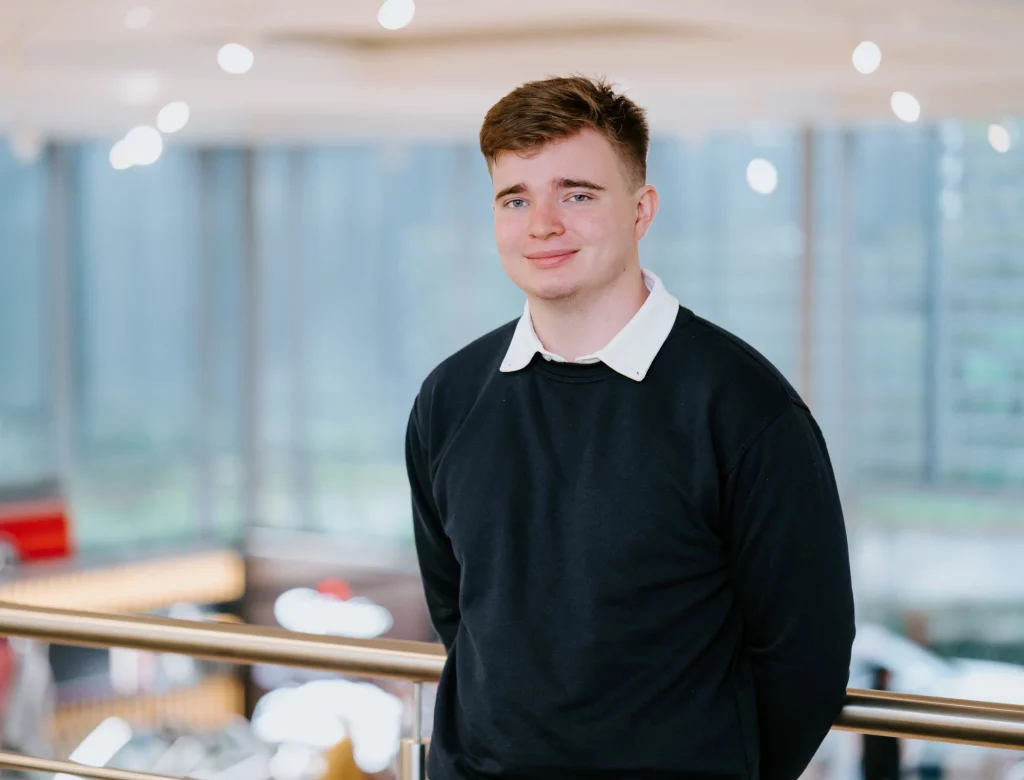
When Ben joined Elara, he was looking for an opportunity to put his skills to use after university.
Having recently completed a Psychology degree, he was exploring different career paths and gaining interview experience when one conversation unexpectedly led somewhere more concrete.
“I thought I was just going in to meet the team for interview practice,” Ben says. “Then I noticed markers of it feeling less like a practice interview and more like an actual interview. I got an email saying, ‘Do you want to come in and meet Bev?’ and I realised, ‘Oh… this is for an actual job.’”
Ben joined the business shortly after as an Office Assistant. Looking back, it turned out to be exactly the kind of environment where he could thrive.
“A lot of my degree was data handling, running experiments and working with processes. I learned very quickly that I didn’t want to work in psychology, but I could use those skills and apply them to real-world situations.”
Today, Ben spends his days supporting different areas of the business, from research projects and LinkedIn outreach to spreadsheets and administration..
Deep thinking and problem-solving
Ask Ben how the team would describe him and his answer comes quickly: “Quiet.”
Ben is happiest when he’s busy. He enjoys having a list of tasks to work through, finding ways to improve processes and getting stuck into projects that require a bit of thinking.
“I like having a heavy workload. I like knowing I’m going to do this, this, this and this. And if I haven’t got something specific to do, I’ll find something.”
In fact, Ben openly admits that organising data and building spreadsheets is something he genuinely finds fun. His colleagues might call it dedication. Ben calls it something else.
“I’m such a dweeb,” he says, laughing.
Making a real difference
Although Ben has only been with Elara a short time, one project already stands out as a particular source of pride. After visiting some of Elara’s commercial sites, he discovered the existing stock take process relied heavily on paper forms and manual data entry.
He wasn’t a fan. “I had to do it one time and I think it was my least favourite thing I’ve ever done in the existence of my life.”
Rather than just accepting it, Ben started designing a better solution. What began as an idea soon became a detailed digital stock take system, developed alongside Leighanne and Joanne and supported by Bev.
“I thought, ‘I’ve got one.’ So I drafted a mock-up, sent it to Bev, and she said, ‘I like this. Can you make a more detailed version?'”
For Ben, the project represented something bigger than a spreadsheet. It was proof that his ideas could have a real impact.
“That was one of the first times I thought, ‘Oh, this is an idea of mine that’s actually coming to fruition.'”
Growing in confidence
Like many people starting a new role, Ben admits he wasn’t entirely sure what to expect. At first, there was a lot of checking, double-checking and asking for reassurance.
Over time, that changed. “I’ve definitely got more confidence in my work. At the start it was, ‘I think I’ve done this right.’ Now I understand the standards I’m working to and how Rebecca likes things done.”
The biggest difference isn’t necessarily that he knows exactly what every day will look like. It’s that he’s become comfortable not knowing.
“When I first started, not knowing what I’d be doing each day felt quite daunting. Now it’s more like, ‘Okay, I’ll figure it out. I’ll get through it.'”
That confidence has had a wider impact too. Working at Elara has helped Ben realise that his skills can apply to far more situations than he originally thought.
“I’ve realised I don’t just have to stay in one lane. It’s made me think, ‘Actually, I can probably do that. Why not?'”
The real workplace difference
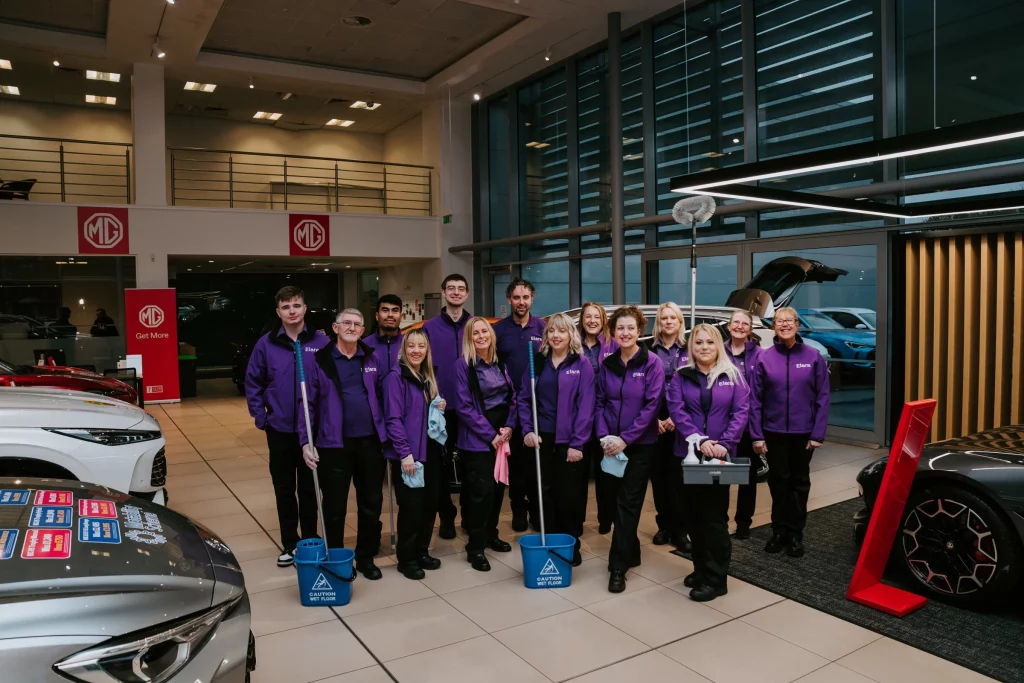
When asked what makes Elara different from other workplaces, Ben doesn’t talk about job titles or company structure. He talks about people.
“I think it’s more flexible, more personable. It’s not some manager fifteen flights of stairs away. They’re right there. You can talk to them. They know the names of your kids and how your dog’s doing.”
He describes the culture as relaxed but productive. Some days the office is quiet and focused. Other days, especially when Bev and Allan are around, things become a little more lively.
Either way, the work gets done. For Ben, that balance is what makes the culture work. The business supports its people, and in return, people want to do good work.
“The main priority is people and quality. If you look after people, people look after you. That’s how we keep staff and that’s how we keep clients.”
Looking to the future
Ben doesn’t pretend to have every step of his future mapped out. What he does know is that he’s far more capable than he gave himself credit for when he first walked through the door.
“It’s a balance of realising I’ve learned a lot, and realising I can still learn more.”
For someone who joined the business expecting little more than interview practice, that’s not a bad lesson to take away.